Understanding UKCA and CE Marking:
What NHS Suppliers Need to Know
Supplying products into the healthcare sector — particularly to the NHS — requires more than quality and competitive pricing. It requires clear regulatory compliance.
Two of the most important compliance gateways for product manufacturers and suppliers are CE marking and UKCA marking. Although often reduced to symbols placed on packaging, these marks represent legal conformity with product safety legislation. For businesses operating in regulated sectors such as medical devices, PPE and clinical equipment, understanding the distinction is essential.
What Is CE Marking?
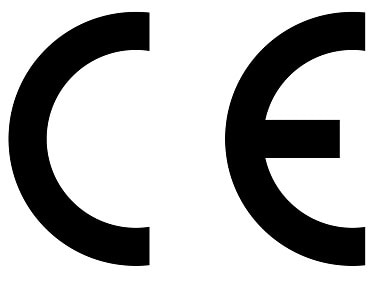
CE marking (from Conformité Européenne) confirms that a product meets the safety, health and environmental protection standards set out in European Union legislation.
Products carrying the CE mark can be placed on the market throughout the European Economic Area (EEA). In certain circumstances, CE marking also remains relevant in Northern Ireland.
The mark is not a quality badge — it is a legal declaration that the manufacturer has met the applicable regulatory requirements and completed the required conformity assessment procedures.

What Is UKCA Marking?
UKCA (UK Conformity Assessed) is the United Kingdom’s product marking regime introduced following Brexit.
It applies to products being placed on the market in Great Britain (England, Scotland and Wales). A UKCA mark confirms that the product complies with UK legislation and has undergone the appropriate conformity assessment process under the UK regulatory framework.
Importantly, UKCA marking is not recognised within the EU. Businesses trading across borders must carefully assess which marking regime applies to each market.
Why This Matters for NHS Suppliers
1. It Is a Legal Precondition to Market Access
If your product falls within a regulated category — such as medical devices, diagnostic equipment, PPE or clinical-use technology — it cannot be legally placed on the market without the appropriate conformity marking.
In practical terms:
Products supplied into Great Britain require UKCA marking (where applicable).
Products supplied into the EU require CE marking.
Products placed on the Northern Ireland market may require CE marking and, in some cases, UKNI indication.
For medical devices in particular, this involves structured conformity assessment procedures, technical documentation and a formal Declaration of Conformity.
Failure to comply is not simply an administrative oversight — it can prevent lawful sale and distribution.
2. NHS Procurement Processes Demand Compliance
NHS trusts, framework operators and central procurement bodies routinely incorporate regulatory compliance into eligibility criteria.
Suppliers may be required to demonstrate valid conformity marking as part of:
Framework agreement applications
NHS Supply Chain tenders
Trust-level purchasing exercises
Clinical consumables and equipment contracts
Where evidence of conformity cannot be provided, suppliers risk exclusion at the pre-qualification stage.
Conformity marking gives procurement teams confidence that products can be lawfully deployed in clinical environments without exposing the organisation to regulatory risk.
3. Cross-Border Suppliers May Need Dual Compliance
For businesses operating across both UK and EU markets, regulatory alignment requires careful planning.
If you intend to supply:
NHS organisations in Great Britain — UKCA compliance will generally apply
EU-based customers — CE marking remains mandatory
Both markets — dual compliance strategies may be required
This is particularly relevant for medical devices and healthcare software, where regulatory divergence can directly affect commercial access.
Why Healthcare Buyers Insist on Proper Marking
Healthcare procurement teams are focused on risk management as much as cost efficiency. Conformity marking supports:
Patient Safety and Performance Assurance
Marking demonstrates that a product has been assessed against recognised safety and performance standards.
Regulatory Oversight
In the UK, bodies such as the Medicines and Healthcare products Regulatory Agency (MHRA) oversee post-market surveillance and safety reporting. Properly marked products can be registered, traced and monitored in accordance with statutory requirements.
Contractual and Legal Certainty
Public sector bodies operate within strict regulatory frameworks. Supplying non-compliant products creates legal exposure and reputational risk — outcomes procurement teams are structured to avoid.
Practical Steps for Suppliers
For businesses seeking to supply into NHS markets, a structured compliance review is advisable:
• Identify which regulations apply to your product category.
• Determine whether UKCA, CE or dual marking is required.
• Complete the appropriate conformity assessment procedures.
• Prepare and retain technical documentation and a Declaration of Conformity.
• Ensure marking is correctly affixed before market placement.
• Maintain records for audit and post-market obligations.
Proactive compliance reduces delays in tendering and protects long-term commercial relationships.
A Strategic Perspective
Conformity marking should not be viewed as a bureaucratic hurdle. For NHS suppliers, it is a commercial enabler.
It provides:
• Lawful access to public healthcare contracts
• Alignment with regulatory expectations
• Demonstrable commitment to safety and quality
• Increased credibility in competitive procurement environments
For organisations operating in highly regulated sectors, robust compliance is not optional — it is foundational to sustainable growth.
Vassallo Associates UK Business Advisory can advise on all aspects of CE and UKCA Marking for NHS Suppliers. Contact us today to discuss your requirements.
Our NHS Supplier Services will help you prepare your organisation to maximise the likelihood of success.
“Quality in healthcare is not about doing more — it’s about doing what matters most for the patient.”
We can help you today
Contact us now to discuss your requirements.
