The maritime industry is on the brink of a revolution with the advent of autonomous ships – vessels that can function without direct human supervision – these ships are poised to revolutionise the maritime sector. These vessels promise to boost productivity, cut expenses, and lessen the chance of human error at sea thanks to their sophisticated sensors, machine learning algorithms, and AI-powered navigation systems.
However, as this technology develops, a number of liability and legal issues surface; specifically the liability for incidents involving autonomous vessels. Throughout this article, we shall examine how maritime regulations are evolving to keep up with this revolutionary technology.
Understanding Autonomous Ships
Autonomous vessels can range in complexity from ships that assist a human crew with navigation to fully autonomous ships that operate entirely without human oversight. These vessels typically fall into four categories:
- Remote-Controlled Ships – controlled by operators onshore, though with a crew on board for emergencies.
- Partially Autonomous Ships – able to perform certain functions independently but require a crew to monitor.
- Fully Autonomous Ships with Remote Supervision – capable of fully independent operations, though remotely monitored.
- Fully Autonomous Ships without Remote Supervision – operate entirely on their own without any human presence or oversight.
These categories highlight a sliding autonomy scale, with higher levels requiring less human intervention. Although this technology is still largely in its infancy, trials are underway, and several countries are working to develop frameworks to allow autonomous ships on their waters.
The Liability Challenge
The legal framework for marine operations has historically been predicated on the idea that human oversight and decision-making are the centre point of any legal debate. With autonomous ships, software, sensors, and machine learning algorithms may take over decision-making duties previously held by a human crew. As a result, attributing fault to a particular individual may prove difficult.
Typically, stakeholders involved in the operation of an autonomous vessel include:
- The Shipowner: The traditional liability holder, responsible for the vessel’s operation and maintenance.
- The Manufacturer: Responsible for the production of the vessel and any technical components, such as navigation software, sensors, and AI algorithms.
- The Software Developers: Developers who design and maintain the vessel’s AI and machine learning models, which govern decision-making.
- Remote Operators: When involved, individuals or teams are responsible for supervising the vessel from shore.
- Insurance Providers: Traditional marine insurance policies are being tested with these new technologies, and questions remain on what liability insurance should cover.
Potential Liability Scenarios
Consider a scenario where a fully autonomous vessel collides with another ship or damages an offshore structure. Traditional maritime laws would attribute liability to the crew and the shipowner. But in the case of autonomous ships, factors such as a software bug, sensor malfunction, or inadequate training of remote operators could all be potential causes of the incident. Tortious liability would become obscure and difficult to determine.
For example, if a software error leads to a collision, should liability fall on the shipowner, the software developer, or the AI provider? Alternatively, if the ship’s sensor system fails due to poor maintenance by the shipowner, the liability may rest with the shipowner, even if the vessel was running autonomously.
These complications imply that, depending on the underlying cause of an accident, multiple parties may be held jointly and severally liable for autonomous ships. A more sophisticated methodology is needed to divide culpability between software, hardware, and human interaction than is currently offered by traditional maritime law.
Maritime Law and Autonomous Ships
International and national maritime laws are only beginning to account for the operation of autonomous ships. Some efforts underway to address these legal questions include:
- The International Maritime Organization (IMO): The IMO has launched its Maritime Autonomous Surface Ships (MASS) initiative, aiming to develop international regulations for autonomous vessels. The IMO’s Maritime Safety Committee is examining current conventions and assessing how they apply to different levels of autonomy.
- The EU’s Regulatory Framework: In Europe, several pilot programs are testing autonomous vessels, and the European Union is actively researching new regulatory approaches. The European Maritime Safety Agency (EMSA) has been tasked with exploring ways to incorporate autonomous ships into European waters while ensuring safety and legal accountability.
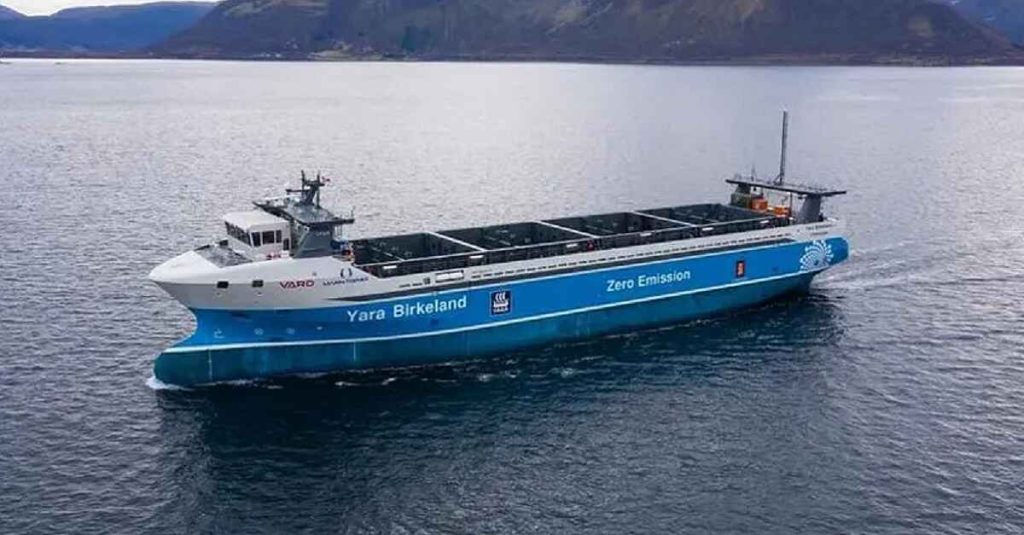
- National Efforts: Countries like Norway, Japan, and the United Kingdom have launched test zones and pilot projects for autonomous ships. In Norway, the Yara Birkeland, an autonomous electric ship, is operating (currently with a 3-man crew who monitor the ship), providing a testbed for regulatory frameworks.
International agreement on rules governing autonomous ships is still in its infancy despite these efforts. Many long-standing maritime legal principles are being called into question by the move towards automation, as current maritime rules were created with the presumption of human oversight.
Insurance and Risk Management
Traditional maritime insurance frameworks are also put to the test by autonomous ships. Usually, environmental factors, technical malfunctions, and human mistakes are used by marine insurers to determine risk. The risk profile shifts significantly with autonomous ships, taking into account variables like software mistakes, cyber risk, and liability for automated decision-making. To handle these new risks, insurers are looking into new products; nevertheless, the lack of established regulatory frameworks makes pricing and coverage terms more unpredictable.
In order to properly evaluate risk, insurers will need a lot more testing and operational data as they adjust to the demands of autonomous ships. Establishing industry-wide standards will be crucial to boosting trust with shipowners, insurers, and government agencies.
Moving Forward: Potential Solutions and Challenges
As the adoption of autonomous ships grows, several potential solutions could address liability concerns:
- Shared Liability Frameworks: Similar to product liability laws in other industries, a shared liability framework could divide responsibility among shipowners, manufacturers, and software developers. Such frameworks would acknowledge the interconnected nature of autonomous vessel operation.
- Standardised Testing and Certification: Standardising and certifying autonomous navigation software, sensors, and AI decision-making systems could help reduce risk. Certification processes could provide a clear set of guidelines and reduce disputes over liability.
- Legislative Reforms: To address autonomous vessel operations, governments and international organisations such as the IMO will probably need to change or enact new regulations. These changes must balance safety and innovation, encouraging responsible growth without impeding advancement.
- Cybersecurity Measures: Cybersecurity safeguards are essential as autonomous ships depend on digital technology. In situations where cyberattacks result in events, liability frameworks may need to define obligations.
Conclusion
With their unprecedented potential and efficiencies, autonomous ships are poised to revolutionise the maritime sector. They do, however, provide particular difficulties for the accepted rules of culpability in maritime law. A cooperative approach will be crucial as national governments, private entities, and international organisations tussle to find a way forward. The maritime sector can strive towards frameworks that efficiently manage liability while encouraging the safe and long-term adoption of autonomous technology at sea by abetting communication between insurers, legal professionals, and technology developers. The development of strong, flexible legal frameworks to support this new era of maritime navigation is just as important to the future of autonomous ships as technological advancement.
Vassallo Associates are specialists in marine litigation. Contact us to discuss your requirements.